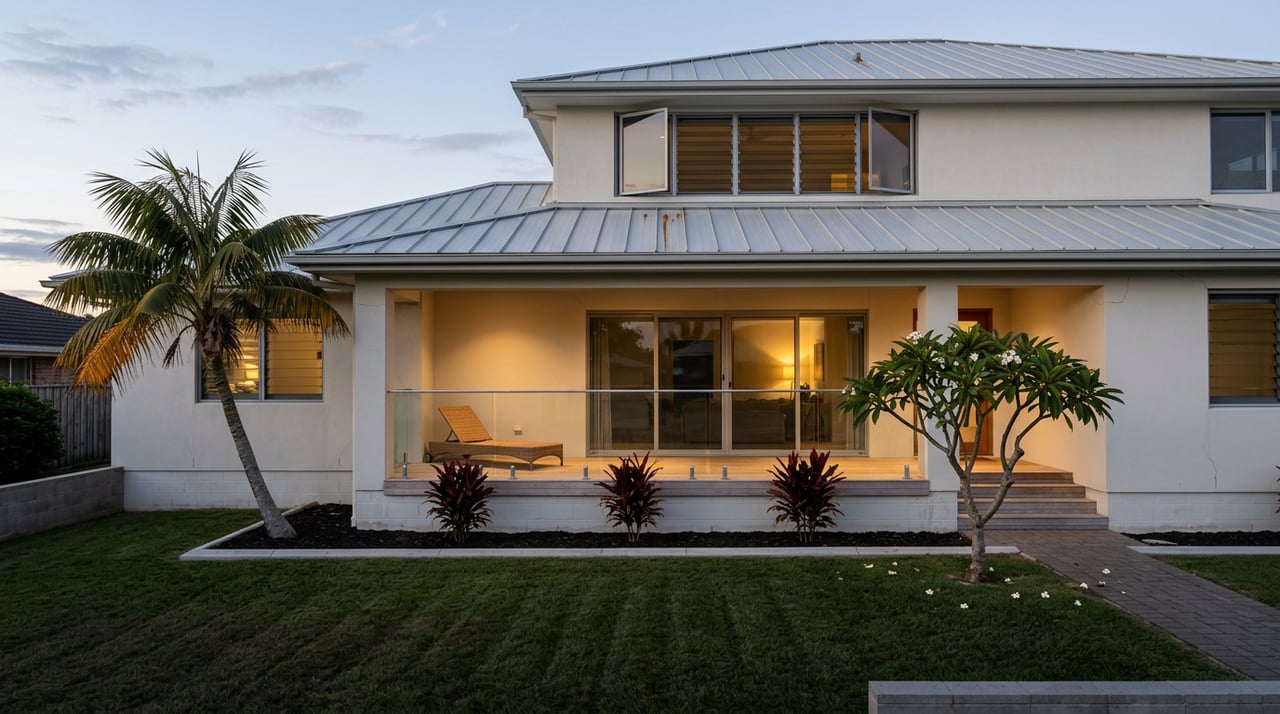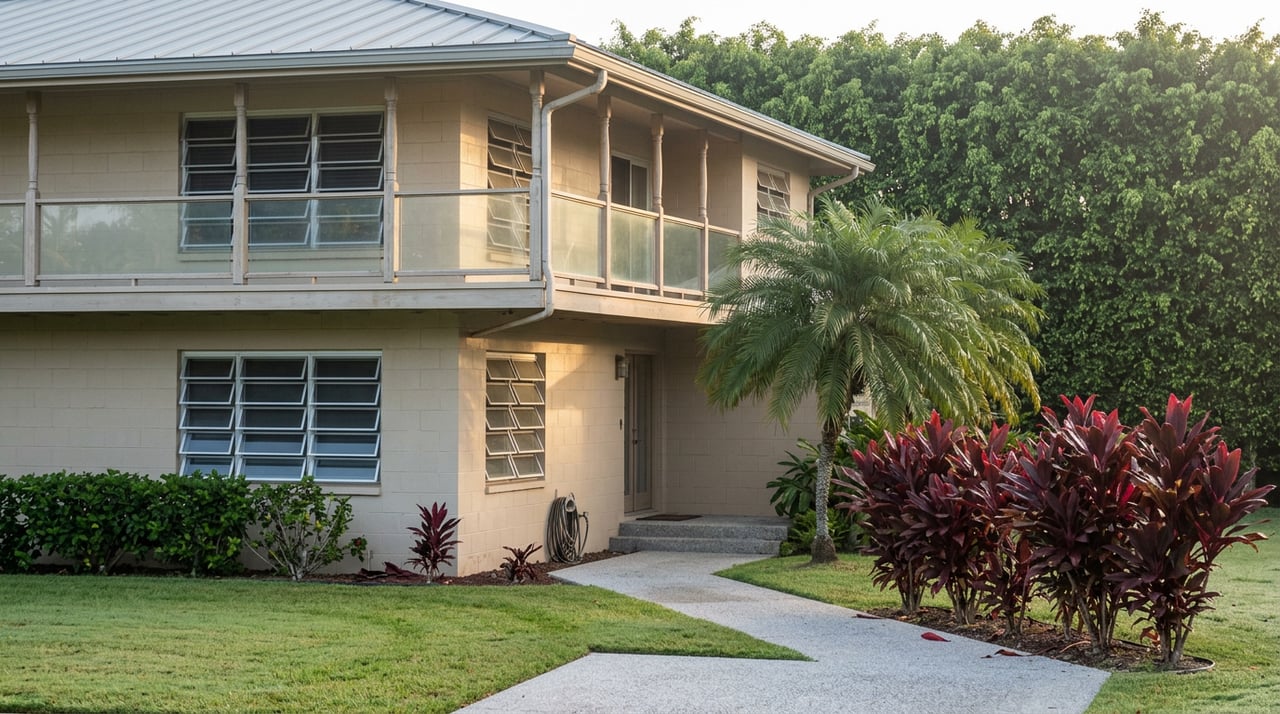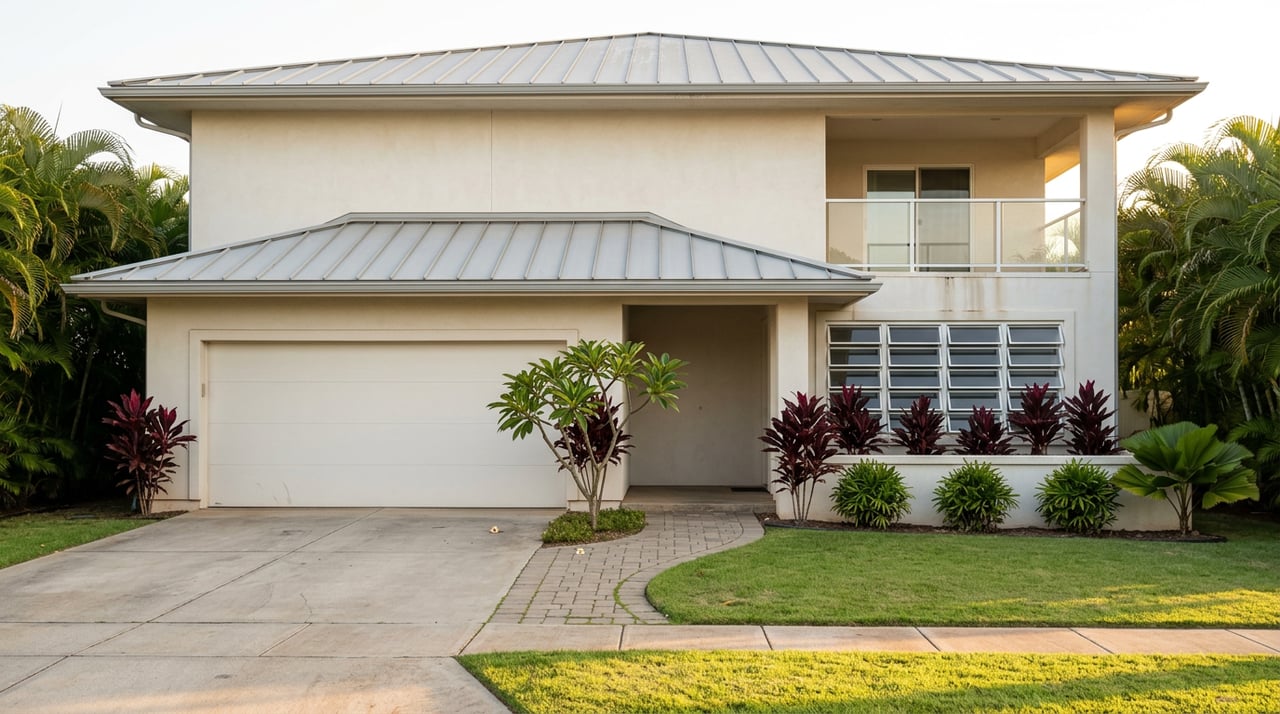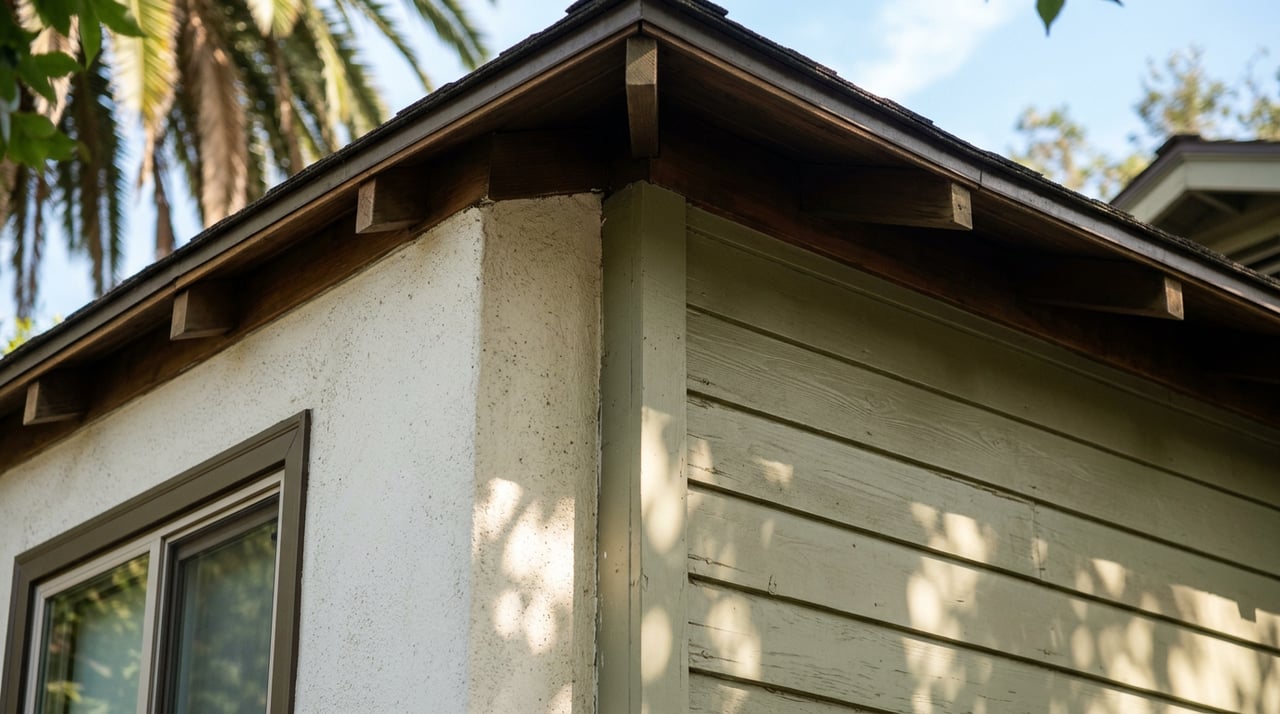
Walk two blocks in Kailua and you can pass a 1958 tongue-and-groove cottage with exposed rafter tails and, three doors down, a rebuilt frame home with drywall, insulation, and a permit stamped within the last decade. Ask both owners what their insurance renewal looked like this year and you will get two very different stories. The permit stamp matters more than the paint color, the yard, or even the price tag. It has become the line that decides whether a Kailua sale closes on schedule or stalls in the final week of escrow.
The Question That Surfaces Later Than It Should
Most Kailua buyers think about insurance the way they think about utilities: a phone call to make after the keys are handed over. For a growing number of Kailua's older homes, that assumption is costing people time they do not have during a contingency period.
Hawaiʻi Public Radio reported in July 2025 that single-family homeowners across the state are increasingly receiving nonrenewal notices, describing it as a pattern that follows the same path condo associations already went through with hurricane coverage. That is not a rumor from one unhappy homeowner. It is a documented shift in how carriers are treating an entire category of housing stock, and Kailua has more of that housing stock than most Oahu neighborhoods realize.
What "Single-Wall" Means, and Why Kailua Has So Much of It
Single-wall construction is exactly what it sounds like: a single layer of tongue-and-groove board doing double duty as both the structural wall and the interior finish, with no stud cavity, no insulation layer, and no vapor barrier behind it. The method traces back to Hawaiʻi's plantation era and became the default building technique across the islands well into the mid-century housing boom of the 1950s and 60s, prized for its low cost and its suitability for cross-ventilation in a warm climate.
Kailua is not a generic sample of that era. It is one of Oahu's clearest physical records of it. The Kalama Beach clubhouse at 280 North Kalaheo Avenue, listed on the Hawaiʻi Register of Historic Places, is documented as a single-story, single-wall building constructed on a concrete slab with tongue-and-groove walls, a structure that has stood in the neighborhood since the 1920s. It is a preserved example of the exact construction method that shows up, in less formal versions, throughout Kailua's original tract homes from the following decades. A house built during that same wave of development was built the same way, whether or not it ever made a historic register.
That is the piece that makes this a Kailua story specifically. A neighborhood built out rapidly during the decades single-wall construction was standard practice will always carry more of that inventory than a neighborhood developed later with modern framing.
| Original single-wall home | Modern-frame rebuild or new construction | |
|---|---|---|
| Typical era | Mid-century Kailua tract housing | Renovated or built post-code-update |
| Wall assembly | Single board, no cavity or vapor barrier | Studs, insulation, interior and exterior layers |
| Carrier posture in 2024-2026 | Nonrenewal notices documented, coverage harder to bind | Standard underwriting in most cases |
| What a buyer should confirm | Bindable hurricane coverage before waiving contingencies | Confirmation still worth requesting, but less friction |
The Carriers Started Pulling Back in 2024, and 2025 Made It a Pattern
The specific trigger has a date attached to it. In December 2024, State Farm began notifying owners of older single-wall homes across Hawaiʻi that the company would no longer offer them hurricane coverage, a decision applied regardless of the home's location, condition, or claims history. Hawaii News Now covered the fallout in July 2025, reporting that homeowners were being told their policies would not be renewed because their homes were older and considered more prone to storm damage.
That is two separate news cycles, eight months apart, both pointing at the same underlying shift. This is not a single carrier tightening one underwriting rule in isolation. It is the leading edge of a broader repricing of risk on Hawaiʻi's oldest housing stock, and it lands hardest on the exact construction type that defines large stretches of Kailua's original neighborhoods.
Why the Average Rate You See Online Won't Tell You Much
If you search for a typical Kailua insurance premium, you will find numbers that flatly contradict each other. One national comparison site lists Kailua and Honolulu at an identical $599 a year. Another lists Kailua homeowners paying an average of $1,850 a year, well above its cited national average. Both are current for 2026. Both cannot be describing the same coverage.
That gap is not a reason to distrust every number you find. It is a reason to stop treating any single online average as a stand-in for your own quote. Construction type, roof age, and whether the home has already been rewired or reframed will move your actual number more than the ZIP code ever will. For a single-wall Kailua home specifically, the honest answer to "what will this cost to insure" is the one your own agent gives you after they know the year it was built and what, if anything, has been upgraded since.
The Replacement Cost Problem Nobody Budgets For
Even homes that can still get a policy are carrying a second, quieter risk. Construction costs in Hawaiʻi have climbed by roughly 31 percent since 2021, driven by shipping costs and island labor rates that run above mainland averages. A policy written a few years ago against an older dwelling coverage limit may no longer reflect what it would actually cost to rebuild that home today. For sellers, that gap rarely comes up until a buyer's lender starts asking questions during underwriting. For buyers, it means the dwelling limit on an assumed or newly bound policy deserves a second look before you treat the number as settled.
There is one more wrinkle worth knowing before you are deep into a transaction. Hawaiʻi law currently requires insurers to give advance notice before a cancellation or nonrenewal, but not before a straightforward premium increase at renewal. A bill that would have required written notice for increases above 10 percent was introduced in 2025 and carried into 2026, but it has not been enacted. That means a seller's premium can jump significantly at the next renewal with no advance warning required, which is exactly the kind of detail worth asking about directly rather than assuming from a current declarations page.
What This Means for Your Escrow Timeline
None of this is a reason to walk away from a classic Kailua home. It is a reason to move the insurance conversation earlier in the process than habit usually puts it. Call an agent during your inspection contingency period, not after it expires. Ask specifically whether the home's construction type and age will bind for hurricane coverage, and get that answer in writing while you still have the right to walk away if the answer is no. If the home has already had wall or framing upgrades, gather the permits and contractor records now, because that documentation is often the difference between a quick bind and a decline.
Homes with genuinely difficult placement still have options. The Hawaii Property Insurance Association exists as the market's backstop for properties that standard carriers decline, and some regional insurers specifically underwrite older Hawaiʻi construction rather than avoiding it. Neither path is instant, which is exactly why the clock should start the week you go under contract, not the week before closing.
A Few Straight Answers
Does every single-wall home in Kailua face a nonrenewal risk? No. The trend documented in 2024 and 2025 applies broadly to older single-wall construction, but individual carrier decisions still vary by company and by property. The only way to know your specific home's status is to ask directly.
Will upgrading the walls guarantee easier coverage? It improves your position, since documented framing and wiring upgrades give an underwriter something concrete to evaluate, but it is not an automatic guarantee with every carrier.
Is this only a Kailua issue? The underlying carrier trend is statewide. Kailua feels it more because so much of its original housing stock was built during the exact decades single-wall construction was the standard method, not because the neighborhood is being singled out.
Buying or selling one of Kailua's classic homes takes a team that knows which questions to ask before you are locked into a timeline. Homes of Hawai'i Real Estate has spent years working through exactly this kind of local detail with Kailua buyers and sellers. Connect with a local expert in Kailua before you write or accept an offer, and let's get the insurance conversation started while you still have room to move.